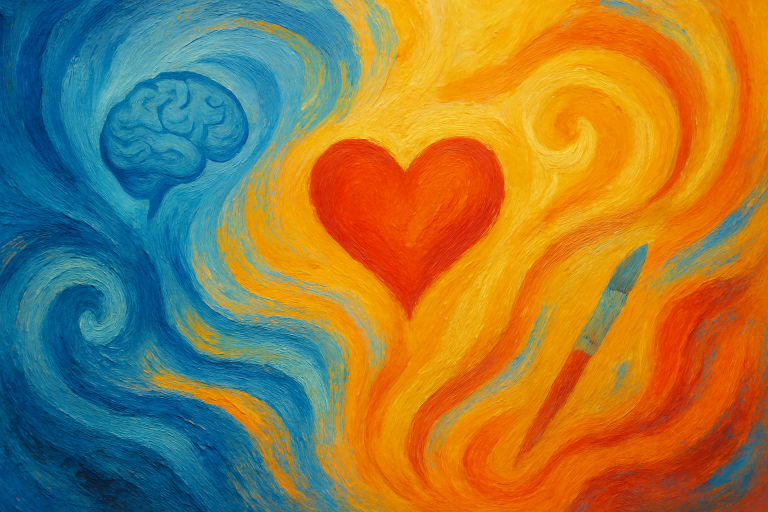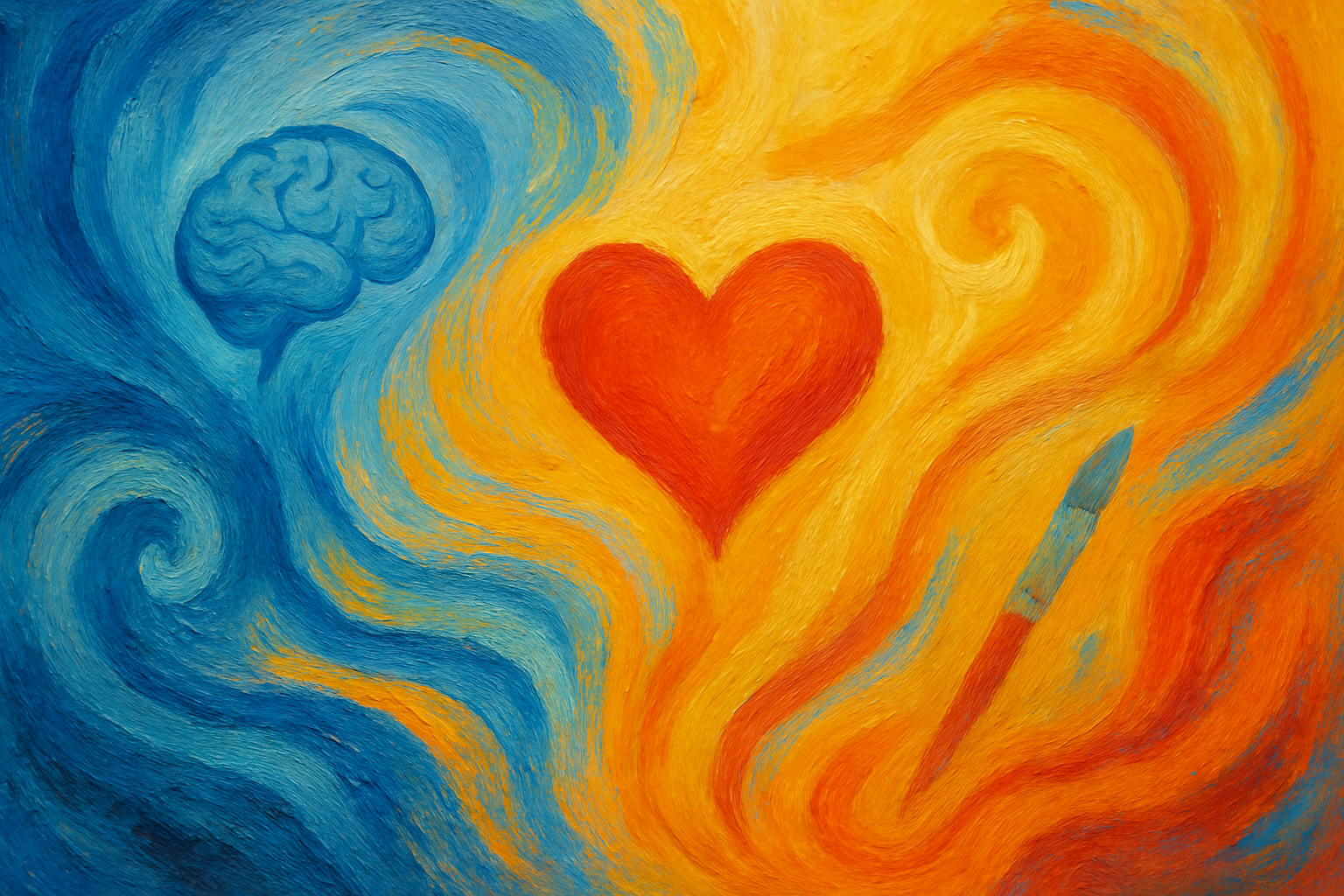
Art has always spoken where words fall short—but abstract art, in particular, has a unique way of connecting directly with our emotions. Unlike realistic paintings that show what is, abstract art explores what could be, opening up space for self-reflection, release, and healing.
In this blog post, we’ll explore how abstract art helps people manage different psychological disorders—from depression and anxiety to PTSD and ADHD—and how you can use it to support your own emotional well-being.
🌧️ Depression: When Color Brings Back Feeling
Depression often feels like a fog—numbing, isolating, and hard to put into words.
Abstract art can help lift that fog by awakening the senses and expressing things that can’t always be said out loud.
How It Helps:
-
Color therapy: Vibrant colors can help reawaken emotional responses.
-
Non-verbal release: Creating or viewing abstract art allows for deep emotional expression without needing words.
-
Motivation: The act of creating can offer a small but powerful sense of purpose.
🎨 Try this: Paint how you feel using only color. Don’t worry about shapes or meaning—just focus on mood and movement.
😰 Anxiety: Finding Calm in Creativity
Anxiety brings on racing thoughts, tight chests, and a constant sense of unease. Interestingly, abstract art offers both an outlet and a calming rhythm.
How It Helps:
-
Expressive freedom: Scribbles and bold strokes allow anxiety to be poured out.
-
Meditative patterns: Repetitive shapes and soft color blends can soothe the nervous system.
-
Focus shift: Art brings you into the present, away from anxious thoughts.
🎨 Try this: Doodle freely in circles, spirals, or flowing lines. Let your hand move with your breath.
🧠 PTSD & Trauma: When Words Are Too Much
For those living with trauma or PTSD, abstract art can be a bridge between emotional overwhelm and healing. Trauma often lives in the body—and art helps let it out safely.
How It Helps:
-
Symbolic release: Abstract art lets people express trauma without reliving it.
-
Layering emotions: Art therapy can involve building, hiding, or revealing layers—mirroring the healing process.
-
Agency: Making art puts creative control back into the hands of the survivor.
🎨 Try this: Use mixed media (paint, paper, fabric) to build textured, layered works. Each piece can represent a feeling or memory.
🌀 Schizophrenia: Exploring Inner Worlds
People with schizophrenia often experience vivid inner worlds. Abstract art resonates with that inner experience and can be both a tool for expression and grounding.
How It Helps:
-
Symbolic connection: Abstract forms reflect nonlinear, dreamlike thoughts.
-
Structure through creativity: Art offers a safe structure to organize and reflect on emotions.
-
Sensory therapy: Working with color, texture, and movement helps regulate the senses.
🎨 Try this: Experiment with intuitive painting—close your eyes and paint what comes to mind using different brushes and tools.
🔁 OCD: Letting Go of Perfection
Obsessive-compulsive disorder is all about control, repetition, and fear of mistakes. Abstract art, by contrast, embraces the imperfect and unknown.
How It Helps:
-
Breaking patterns: Abstract art introduces creative “chaos” in a safe way.
-
Releasing control: Art-making lets people slowly practice letting go.
-
Rechanneling rituals: Repetitive strokes or layering in art can mimic compulsions—but with a peaceful, mindful intention.
🎨 Try this: Set a timer and paint for 5 minutes—no plan, no correction, no judgment. Just move.
⚡ ADHD: Tapping Into Creative Energy
ADHD can bring restlessness, impulsivity, and scattered focus. Abstract art aligns beautifully with these traits—offering movement, stimulation, and expression.
How It Helps:
-
Immediate engagement: Bright colors and fast techniques keep attention and momentum.
-
Freedom of expression: No pressure to follow rules or create perfect lines.
-
Flow state: Many with ADHD enter a state of creative focus while making art.
🎨 Try this: Try acrylic pouring or finger painting for fast, tactile fun that follows your rhythm.
🧪 Science Meets Art
Neuroscience is catching up with what artists have long known:
-
Viewing abstract art activates brain areas linked to introspection and emotional processing.
-
Creating art lowers cortisol (the stress hormone) and improves mood.
-
Color and form impact the nervous system, helping regulate emotions.
So yes, abstract art doesn’t just look good—it feels good.
✨ Everyday Ways to Use Abstract Art for Mental Health
You don’t have to be a professional artist—or in therapy—to experience the benefits. Here are a few ways to bring abstract art into your life:
-
🎨 Mood painting: Paint your emotions using color only.
-
🖋️ Art journaling: Mix doodles, scribbles, and textures with your thoughts.
-
🌀 Mindful viewing: Sit with an abstract piece and notice what you feel—no need to understand it.
-
🖌️ Creative breaks: Use short, 10-minute art sessions to reset your mind during the day.
The goal isn’t to make something perfect—it’s to feel something real.
💬 Final Thoughts
In a world that often demands explanation and perfection, abstract art gives us permission to be messy, emotional, and uncertain. For those living with psychological disorders, that kind of freedom can be the first step toward healing.
So pick up a brush. Splash on some color. Let go of the rules—and let your mind breathe.
🛍️ Browse my Abstract paintings full Etsy store here: https://faripalette.etsy.com
https://www.instagram.com/fari.arts4444/
Faripalette (Farzaneh Sedighian, BSc, MSc, PhD candidate)