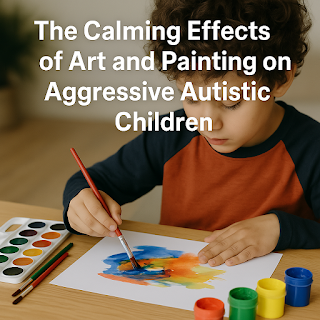
Page 1: Understanding the Connection Between Art and Autism

Aggression can be one of the most challenging behaviors for caregivers and educators of autistic children. It can stem from sensory overload, communication difficulties, or emotional distress. While medication and behavioral therapy are common interventions, there’s a growing body of evidence showing that art—particularly painting—can be a gentle, powerful tool for emotional regulation and healing.
Art offers a nonverbal, sensory-friendly outlet for children who might struggle to express their feelings in words. For many autistic children, especially those with aggressive tendencies, painting becomes more than just a hobby—it becomes a language, a refuge, and even a path to peace.
Why Art Works for Autistic Children
Art taps into a child’s sensory world. Many autistic children are highly sensitive to their environment—lights, sounds, textures, and even emotional energy can feel overwhelming. Painting offers a way to take control of that sensory input. The tactile feeling of paint, the repetition of brush strokes, the soothing colors—these can all ground and calm a dysregulated nervous system.
Painting is also free from judgment. There are no right or wrong answers in art. This is especially important for autistic children who may struggle in structured environments or feel misunderstood. In a world that often expects them to “fit in,” art gives them a place to just be.
Page 2: How Painting Helps Calm Aggressive Behaviors
1. Emotional Expression Without Words
Aggression in autistic children is often a response to frustration or anxiety—feelings that can be difficult to express with words. Painting provides a safe and expressive outlet where children can “speak” through color, shape, and form. Bright, bold colors might reflect intense feelings, while softer shades can help promote calm.
A child who is unable to say, “I’m angry” or “I feel scared,” might instead pick up a brush and pour those emotions onto a canvas. This form of visual self-expression allows for emotional release without confrontation, reducing the likelihood of outbursts.
2. Sensory Integration and Self-Soothing
For many autistic children, sensory experiences are either overwhelming or underwhelming. Painting naturally engages multiple senses: the feel of the brush, the smell of the paint, the movement of the hand. These sensory elements help in regulating the sensory system, making the child feel more grounded and present.
The repetitive motion of brush strokes or finger painting can also have a self-soothing effect, similar to rocking or fidgeting. This kind of sensorimotor activity can help prevent meltdowns and reduce the frequency of aggressive episodes.
3. Encouraging Focus and Reducing Anxiety
Painting requires attention and engagement. When children focus on creating art, their minds are gently redirected from overwhelming emotions to something constructive and creative. This form of focused distraction can be extremely beneficial during times of stress.
Moreover, the act of finishing a painting—even if it’s abstract or unstructured—can give a child a sense of accomplishment and control. This boost in confidence may lead to a decrease in frustration-driven behaviors.
Page 3: Practical Tips for Introducing Painting to Autistic Children
Creating a Calm Art Space
If you’re a parent, teacher, or therapist looking to incorporate painting into a child’s routine, creating a peaceful, predictable environment is key. Here’s how:
-
Keep materials simple: Use non-toxic paints, a few brushes, and paper or canvas. Too many options can be overwhelming.
-
Use calming colors: Offer choices like blue, green, and pastel tones which are naturally soothing.
-
Minimize distractions: Choose a quiet corner with soft lighting and minimal noise.
-
Allow for freedom: Let the child explore without pressure or rules. The goal is to express, not impress.
Guided vs. Freeform Painting
Some children may benefit from guided painting sessions, where you introduce themes like “paint your favorite animal” or “use colors that show how you feel.” Others may thrive with freeform painting, where they are in full control. Try both and observe what works best.
Celebrate the Process, Not Just the Product
Always focus on the experience rather than the outcome. Praise the effort, the choices made, and the emotions expressed. Displaying their artwork at home or school can give children a sense of pride and recognition, which helps build emotional resilience.
In Conclusion: Art as a Gentle Ally
Painting won’t “cure” autism or eliminate aggressive behavior overnight, but it can be a beautiful companion in a child’s emotional journey. For many autistic children, painting becomes a bridge between the chaos of their internal world and the external world around them. Through color, texture, and movement, they find a voice, a safe space, and, most importantly, peace.
So next time you see a child with paint on their hands and a twinkle in their eye—know that art might just be their therapy in motion.
🛍️ Browse my Abstract paintings full Etsy store here: https://faripalette.etsy.com
https://www.instagram.com/fari.arts4444/
Faripalette (Farzaneh Sedighian, BSc, MSc, PhD candidate)