The Calming Effects of Painting on Mood and the Brain
.jpg)
In today’s fast-paced world, stress and mental fatigue have
become daily struggles for many people. While meditation, exercise, and
mindfulness are often recommended for emotional balance, another practice has
quietly proven its value for brain calmness and emotional well-being: painting.
Whether through abstract brushstrokes, detailed landscapes, or expressive
colors, painting can significantly influence how we feel and how our brains
process emotions.
Painting as a Form of Mindful Escape
Painting provides a unique type of mindfulness. When a
person focuses on mixing colors, creating shapes, or applying brushstrokes, the
mind naturally shifts into a “flow state.” Flow is a psychological
state where people become fully absorbed in an activity, losing track of time
and detaching from stressors (Csikszentmihalyi, 1990). This immersion allows
the brain to quiet the constant cycle of worry and instead focus on creativity
and expression.
Studies show that engaging in visual arts like painting can
reduce cortisol, the body’s primary stress hormone (Kaimal et al., 2016). This
means that after even a short painting session, people often experience a
lighter mood, a calmer mind, and reduced physiological stress.
Boosting Mood Through Self-Expression

Painting is also powerful because it offers nonverbal
expression. Emotions that may be hard to articulate through words-such as
grief, anxiety, or even joy-can be released onto a canvas. Psychologists note
that creative expression helps people process emotions, externalize inner
tension, and achieve a sense of relief (Stuckey & Nobel, 2010).
Even for those without professional training, the simple act
of painting allows for safe exploration of feelings. Bright colors, for
example, may uplift the mood, while darker tones may help channel deeper
emotions. In both cases, the brain experiences relief by giving emotions a
visual outlet.
Neurological Benefits of Painting
From a neuroscience perspective, painting engages multiple
brain regions at once. It stimulates the prefrontal cortex, which is associated
with decision-making and focus, while also activating areas responsible for
emotion, memory, and creativity (Bolwerk et al., 2014). This integration
fosters better emotional regulation and resilience.
Interestingly, long-term engagement in artistic activities
may even protect the brain against cognitive decline. A study in the
journal NeuroImage found that creating art enhances
connectivity between different brain regions, supporting mental flexibility and
emotional health (Bolwerk et al., 2014). In short, painting not only calms the
brain in the moment but may also contribute to long-term mental well-being.
Painting as Therapy and Stress Relief
Art therapy-a clinical approach that uses painting and other
forms of visual art-has been widely applied for individuals coping with
depression, trauma, and anxiety. Research shows that structured painting
sessions can reduce symptoms of anxiety and improve self-esteem
(Czamanski-Cohen & Weihs, 2016).
Even outside formal therapy, many people find that painting
at home serves as a personal sanctuary. Setting aside time for painting can
create a routine of relaxation and self-care. Unlike passive leisure activities
(like watching TV), painting requires active participation, which makes it more
effective in calming the nervous system and providing a sense of achievement.
Why Painting Feels Calming

Several factors explain why painting, specifically, promotes
brain calmness:
- Sensory
Engagement – The visual and tactile sensations of working with
paint are soothing and grounding. - Creative
Freedom – There are no strict rules; freedom of choice reduces
pressure and increases enjoyment. - Flow
State – Full concentration reduces negative thinking and
intrusive thoughts. - Self-Expression –
Putting inner emotions onto canvas reduces internal conflict. - Achievement
and Pride – Completing a painting, regardless of skill, boosts
dopamine and creates positive reinforcement.
Practical Tips to Use Painting for Calmness
- Set
aside 20-30 minutes a few times a week to paint without judgment
or pressure. - Use
colors intuitively-choose hues that feel right rather than trying to
make something perfect. - Try
abstract styles if you’re new; they are more about emotion than
technical skill. - Paint
in silence or with calming music to enhance relaxation. - Join
group painting sessions for both social and emotional benefits.
Final Thoughts

Painting is more than a hobby-it is a mental health tool
that blends creativity with calmness. By reducing stress hormones, improving
mood, and engaging the brain’s emotional networks, painting offers an
accessible and enjoyable way to support psychological well-being. Whether
through professional art therapy or casual painting at home, the evidence is
clear: the act of painting can help calm the mind and uplift the spirit.
If you’re curious about experiencing this effect through
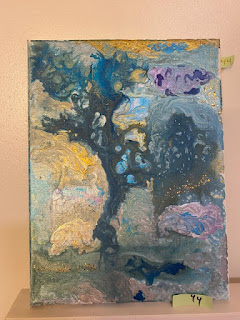
art, I invite you to visit my https://faripalette.etsy.com and explore my
collection of paintings. Each piece was created with the intention of bringing
tranquility and happiness to the viewer’s space. Surrounding yourself with
calming, expressive artwork can be a simple yet powerful way to relax your mind
and elevate your mood.
References
- Bolwerk,
A., Mack-Andrick, J., Lang, F. R., Dörfler, A., & Maihöfner, C.
(2014). How art changes your brain: differential effects of visual art
production and cognitive art evaluation on functional brain
connectivity. NeuroImage, 81, 37-48. - Csikszentmihalyi,
M. (1990). Flow: The Psychology of Optimal Experience. Harper
& Row. - Czamanski-Cohen,
J., & Weihs, K. L. (2016). The bodymind model: A platform for studying
the mechanisms of change induced by art therapy. The Arts in
Psychotherapy, 51, 63-71. - Kaimal,
G., Ray, K., & Muniz, J. (2016). Reduction of cortisol levels and
participants’ responses following art making. Art Therapy,
33(2), 74-80. - Stuckey,
H. L., & Nobel, J. (2010). The connection between art, healing, and
public health: A review of current literature. American Journal of
Public Health, 100(2), 254-263.