How Art Helps Autistic Children Communicate
— And Sometimes Even Find Their Words
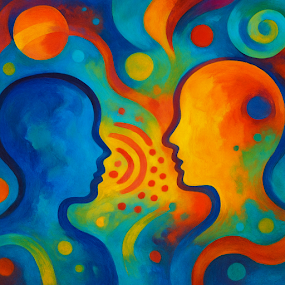
Imagine a world where colors, shapes, and textures speak louder than words.
For many autistic children, that’s exactly what art can offer — a bridge to connect with others, express feelings, and even encourage speech and language development.
In this post, we’ll explore how both doing art and experiencing art can play a powerful role in helping autistic children communicate — sometimes unlocking words in ways that traditional therapy can’t.
1. Art Creates a Safe Space to Express Feelings
Communication is hard when emotions are overwhelming.
Many autistic children feel things very deeply but struggle to find words for those emotions. That’s where art steps in.
Painting, drawing, and even sculpting can become a new “language” — a way to say “I’m happy,” “I’m scared,” or “I need help” without having to form a sentence.
When children feel safe expressing themselves through art, it reduces frustration. It helps them practice sharing thoughts in a way that feels natural to them. Over time, this emotional release can lower anxiety, making it easier for words and conversations to happen.
Fun fact:
Studies show that when stress hormones drop (which often happens during creative activities), it becomes easier for the brain’s language centers to “wake up.”
2. Making Art Builds Brain Connections for Language
Art isn’t just emotional — it’s neurological.
When a child draws, colors, paints, or sculpts, their brain is doing something amazing: building pathways between areas that control movement, vision, feeling, and yes — language.
Every time a child moves a paintbrush or shapes clay, their brain is practicing communication — even if it’s nonverbal at first.
This connection between the senses and speech is especially important for autistic kids, whose brains may be wired a little differently. Engaging multiple senses at once (touch, sight, movement) helps strengthen the parts of the brain needed for talking, listening, and understanding.
Art sessions are like a “language workout” — but way more fun than sitting at a desk doing flashcards!
3. Watching Art Sparks Conversation, Too
It’s not just about making art — looking at art can help, too.
When autistic children visit a museum, look at a book of paintings, or even scroll through pictures online, they are exposed to images that invite conversation:
-
“What do you see?”
-
“What do you think is happening in this picture?”
-
“How do you feel when you look at it?”
Simple, open-ended questions like these create opportunities for kids to practice speaking, naming emotions, and telling stories — at their own pace.
Art gives them something concrete to talk about.
For a child who might struggle with abstract conversation (“How was your day?”), talking about a picture feels more manageable and less stressful.
4. Art Therapy Has Proven Results
Professional art therapy is an entire field devoted to this idea — and it’s showing real results.
Research has found that art therapy can improve communication skills, social interaction, and emotional regulation in autistic children. Some studies even report children speaking their first words after months of expressing themselves nonverbally through art.
In art therapy sessions, trained therapists use painting, drawing, collage, and sculpture to help kids:
-
Build trust and open up
-
Label emotions with words
-
Practice turn-taking and sharing ideas
-
Tell stories about their creations
Over time, many children start to make connections between their art and spoken language — without feeling pressured.
5. Making Art Together Builds Social Skills
Sometimes it’s not just about individual expression — it’s about connection.
Group art activities give autistic kids a way to interact with peers in a structured but low-pressure setting. Sharing supplies, commenting on each other’s work, or collaborating on a mural can teach important social skills like:
-
Asking for help
-
Giving compliments
-
Taking turns
-
Working toward a shared goal
These social moments can naturally lead to more talking — whether it’s sharing ideas, joking about silly drawings, or simply saying “I like your painting!”
And because it’s all happening during play, it feels fun — not forced.
Final Thoughts: Art is a Bridge, Not a Shortcut
Art won’t “cure” autism, nor should it try to.
But it can be a beautiful bridge to better communication, deeper relationships, and yes — sometimes even speech.
For autistic children, art offers something incredibly powerful:
A way to be seen, heard, and understood — with or without words.
If you’re a parent, teacher, or therapist, remember:
Every scribble, splash of color, or admiring glance at a painting could be a tiny step toward connection.
Sometimes, the most important conversations start without words at all.
Final Thoughts: Art is a Bridge, Not a Shortcut
Art won’t “cure” autism, nor should it try to.
But it can be a beautiful bridge to better communication, deeper relationships, and yes — sometimes even speech.
For autistic children, art offers something incredibly powerful:
A way to be seen, heard, and understood — with or without words.
If you’re a parent, teacher, or therapist, remember:
Every scribble, splash of color, or admiring glance at a painting could be a tiny step toward connection.
Sometimes, the most important conversations start without words at all.
Explore More: Abstract Art that Speaks to the Heart
If you believe in the power of art to communicate and inspire, I invite you to explore my own collection of abstract paintings.
Each piece is created to evoke emotion, spark imagination, and offer a moment of calm and connection — especially for those who experience the world a little differently.
🖼️ Visit my Etsy shop to discover my latest artworks: faripalette.etsy.com
📷 Follow me on Instagram for behind-the-scenes inspiration and new releases: @fari.arts4444
I would be honored to share my art with you — and maybe even be part of your story.