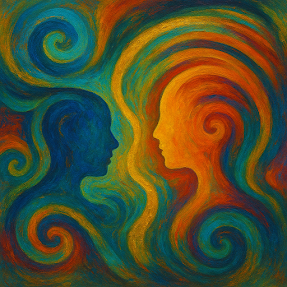
How Art Can Help Children with Asperger’s
Syndrome Thrive
Art isn’t just something beautiful to look at — for many children with Asperger’s Syndrome, it’s a powerful tool for growth, connection, and healing.
Children on the autism spectrum, including those with Asperger’s, often experience the world in vivid, unique ways. Art taps directly into that world — offering a safe, joyful path to self-expression, communication, and emotional well-being.
In this post, we’ll explore how art affects children with Asperger’s and why it can be a life-changing part of their journey.
1. Art Helps Children Express What Words Can’t
Children with Asperger’s are often highly intelligent and observant, but they may find it difficult to express emotions or social cues through spoken language.
Art opens a new door.
Through drawing, painting, or sculpting, children can express deep feelings — happiness, fear, curiosity, frustration — without needing to “find the right words.”
Art becomes a personal language, one that’s free from the stress and confusion of everyday conversations.
For many kids, this feels incredibly freeing. They can share their inner worlds, process their experiences, and tell their stories — even if they aren’t ready (or don’t want) to talk.
Beautiful note:
Some art therapists say the first real emotional “conversations” they have with Asperger’s children happen not with words, but with drawings and colors.
2. Art Builds Confidence and Reduces Anxiety
Many children with Asperger’s struggle with anxiety — about social situations, schoolwork, sensory overload, or simply being misunderstood.
Art offers a calming, focused activity where there are no “wrong answers” and no social rules to figure out.
This freedom is powerful.
Creating art can:
-
Lower stress hormones in the body
-
Improve mood and emotional regulation
-
Boost feelings of self-esteem and competence
When children complete a piece of art — even a simple drawing or colorful abstract painting — they experience pride. They see that they can create something meaningful and beautiful, just by being themselves.
And that feeling? It carries over into other parts of life.
3. Art Enhances Social Skills in Gentle, Natural Ways
Children with Asperger’s often want friends, but they may not know how to start conversations, read social cues, or play cooperatively.
Art activities, especially in group settings like classes or workshops, offer a low-pressure way to build social skills.
During art-making, kids can practice:
-
Sharing materials
-
Giving and receiving compliments (“I love your painting!”)
-
Collaborating on group projects
-
Listening to others’ ideas
-
Taking turns
Because the focus is on the shared activity — not on “small talk” — social interaction feels more manageable and meaningful.
Over time, children who engage in group art projects often become more confident socially — without feeling overwhelmed.
4. Art Develops Key Cognitive and Emotional Skills
Art is fun, but it’s also serious brain work!
When children create art, they engage multiple parts of their brain at once, strengthening important skills like:
-
Visual thinking
-
Problem-solving
-
Planning and organizing
-
Fine motor control
-
Attention to detail
-
Emotional awareness
For kids with Asperger’s, who often excel in logic and pattern recognition, art can build a bridge between intellectual strengths and emotional growth.
It helps them explore creativity, flexibility, and new ways of thinking — areas that can sometimes be challenging but are essential for full, rich lives.
5. Art Gives a Sense of Identity and Belonging
One of the hardest parts of growing up with Asperger’s can be feeling “different” — feeling like you don’t quite fit in with peers or society’s expectations.
Art offers a space where difference is celebrated, not judged.
Through painting, drawing, photography, sculpture, or digital art, children with Asperger’s can create a personal world where they belong completely.
They can:
-
Develop a unique style
-
Showcase their talents
-
Connect with others who appreciate their vision
-
Be seen for who they truly are
Many artists throughout history were likely on the autism spectrum — and their unique way of seeing the world enriched all of us. Children with Asperger’s who dive into art today are carrying forward that same incredible legacy.
Final Thoughts: Art Is More Than Therapy — It’s a Gateway to Flourishing
For children with Asperger’s Syndrome, art isn’t just an activity.
It’s a lifeline to communication, confidence, emotional understanding, and social connection.
Whether it’s through bold splashes of color, intricate line drawings, abstract sculptures, or digital creations, every artistic effort helps these children thrive in a world that can sometimes feel confusing or overwhelming.
Art says: “You belong. Your voice matters. You are seen.”
And for any child — especially one with Asperger’s — there’s no greater message than that.
Explore My World of Abstract Art
If you’re passionate about the power of creativity, I invite you to explore my own world of abstract paintings, crafted with love and intention.
🎨 Visit my Etsy shop to see my latest works: faripalette.etsy.com
📷 Follow me on Instagram for daily inspiration and behind-the-scenes looks: @fari.arts4444
Thank you for letting art be part of your journey, too.
Sources
-
American Art Therapy Association. The Benefits of Art Therapy for Children with Autism Spectrum Disorders. arttherapy.org
-
National Autistic Society. Creative Therapies and Autism. autism.org.uk
-
Schweizer, C., Knorth, E. J., & Spreen, M. (2020). Art therapy with children with autism spectrum disorders: A review of clinical case descriptions. Frontiers in Psychology, 10.3389/fpsyg.2020.572623
-
Evans, K., & Dubowski, J. (2001). Art Therapy with Children on the Autism Spectrum: Beyond Words. Jessica Kingsley Publishers.
-
Autism Speaks. Art Therapy and Autism. autismspeaks.org
-
Grandin, T. (2013). The Autistic Brain: Thinking Across the Spectrum. Houghton Mifflin Harcourt